
Outspiration: an inspirational garden that starts with the ground
01/01/2020 - 00:00
From a traditional show garden full of stones to a green inspirational garden where hard landscaping, planting, water and biodiversity come together.
With Outspiration, concrete manufacturer EBEMA completely transformed its former show garden.
During construction, it soon became clear just how important the elements are that you no longer see afterwards: the soil. A thick layer of rubble, newly brought-in soil that first had to be analysed, plants that were adapted to the soil conditions… The project became a fine example of why a successful garden begins underground.
We spoke about it with Leen Berckmans, project manager at Outspiration, and Bjorn Hulsmans, product manager at Aegten, the TerraCottem distributor in Belgium and one of the project’s partners.
Leen, who knew EBEMA’s former show garden, sees something completely different today. What did you want to achieve with Outspiration?
Leen: Our previous show garden was actually a bit like a ‘supermarket’ of paving stones. All the paving was laid side by side, but there was little sense of a garden experience. Whereas today, people want to experience what their garden could really look like. What happens when you combine that paving with greenery, trees, water, lighting, outdoor furniture…?
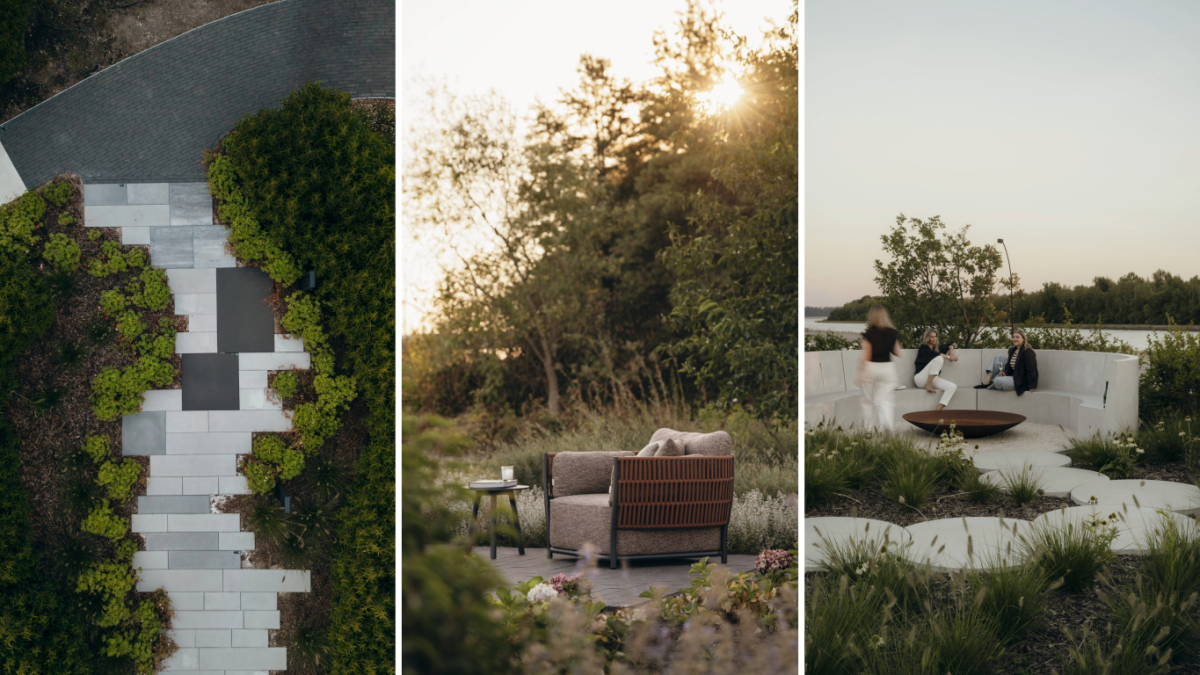
That’s why we set out to find partners with different areas of expertise. Not just for the planting, but also, for example, for the soil, irrigation and water features. That way, we were able to create a holistic experience.
And that collaboration is important. A good landscaping contractor knows a lot, but can’t be an expert in everything. By bringing together different areas of expertise, you ultimately achieve a better result.
It soon became clear that this was necessary, as you encountered a surprise during the groundworks, didn’t you?
Bjorn: Yes. We’d originally planned to excavate to a depth of about 30 cm and bring in new soil. But then we came across a thick layer of rubble. In hindsight, perhaps that wasn’t so surprising, as this area used to be mainly paved.
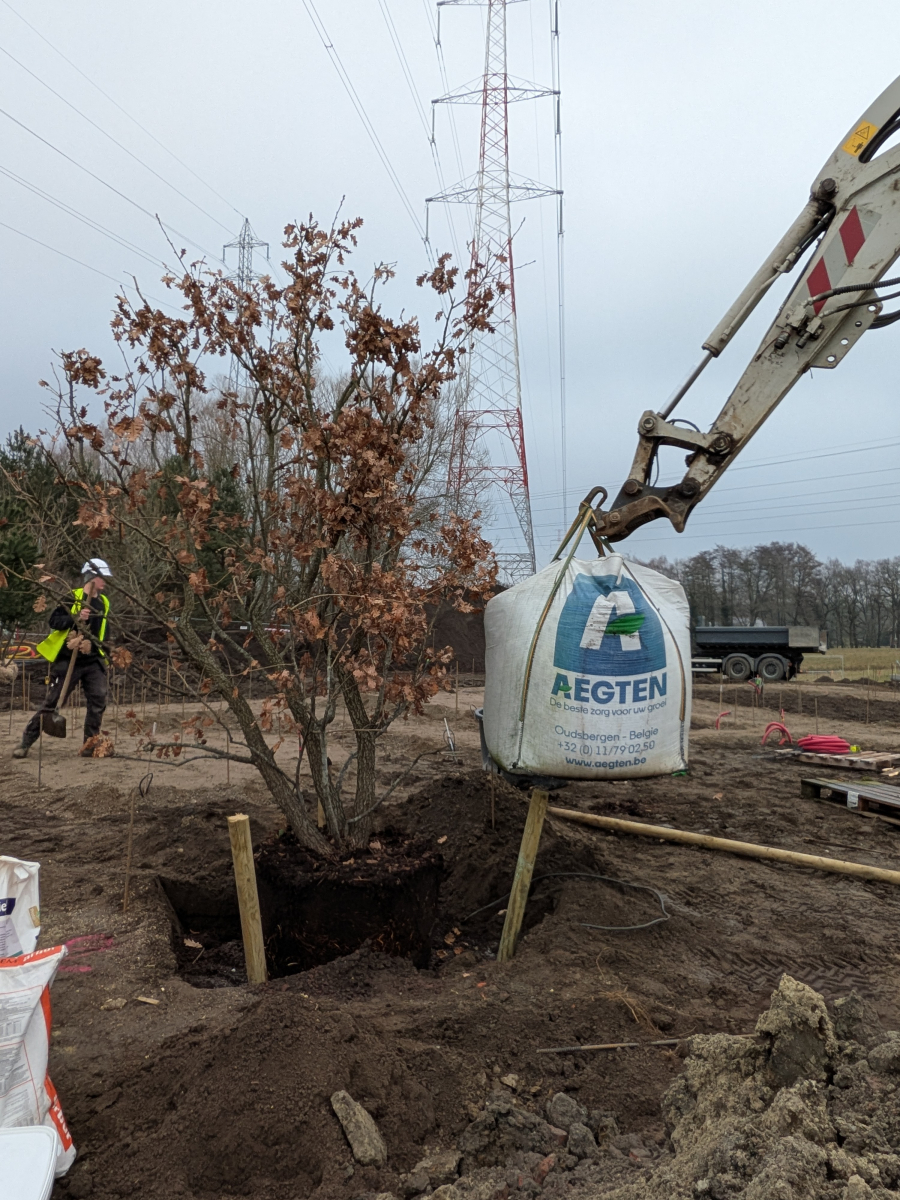
In the end, we dug deeper and brought in completely new soil. But of course, that’s not the end of it. That new soil was analysed first, and based on that, we looked at what was needed to restore the soil’s balance.
You say ‘of course’, but does that actually always happen in practice?
Bjorn: No, absolutely not. That’s precisely where things often go wrong.
People still very often think: I’ll bring in some new, black soil and that’ll do the trick. But new soil isn’t necessarily good soil. Sometimes existing soil is even dug up when it isn’t necessary, only to be replaced by soil that isn’t any better.
Moreover, soil is quite complex. Take pH, for example. Many people have a certain pH value in mind that they think is right. But what constitutes a good pH also depends on the soil type. Without a soil analysis, you don’t really know exactly where you’re starting from.
For us, therefore, it starts with taking measurements. What is the acidity level? Which nutrients are present? What about the structure and soil life?
"What does that soil need to support good plant growth?"
Do you think the soil gets enough attention in gardening projects?
Bjorn: The soil doesn’t always get the same attention as everything you see above ground. Yet that’s where the foundation lies, of course. And every soil is different. That’s why we prefer to start with a soil analysis. Then you know what you’re dealing with and can assess what’s needed in a much more targeted way.
Leen: That also came across very clearly in our conversation with Mentens Nursery, who were responsible for the trees, shrubs and perennials here. Their message was essentially: we can supply such beautiful, high-quality plants, but if the soil isn’t right, those plants will never show their best side.
That says a lot.
Did the soil here also influence the choice of plants?
Leen: Yes. Originally, the landscape architect had specified different plants. Based on the conditions, Mentens Nursery adjusted a number of choices.
Bjorn: A specific example is the yew that was originally planned. Because of the hard subsoil, there was a risk that its roots would remain partially in soil that was too wet. Yews are sensitive to that. That’s why we opted for Prunus lusitanica.
This shows how important it is to take the soil into account when selecting plants at an early stage of the project.
You didn’t just tackle the soil itself. TerraCottem arbor was also applied to the trees. Why?
Bjorn: After we’d assessed what was needed to improve the soil and stimulate soil life, I also wanted to focus on water retention in the soil.
There are a number of large and unusual trees here. For Mentens Tree Nursery, it was naturally important that these trees would establish as well as possible right from the moment they were planted. That is why we added TerraCottem arbor soil improver to the trees.
For me, that completes the whole soil picture. You must first ensure that the basics are right and then assess what additional support is needed.
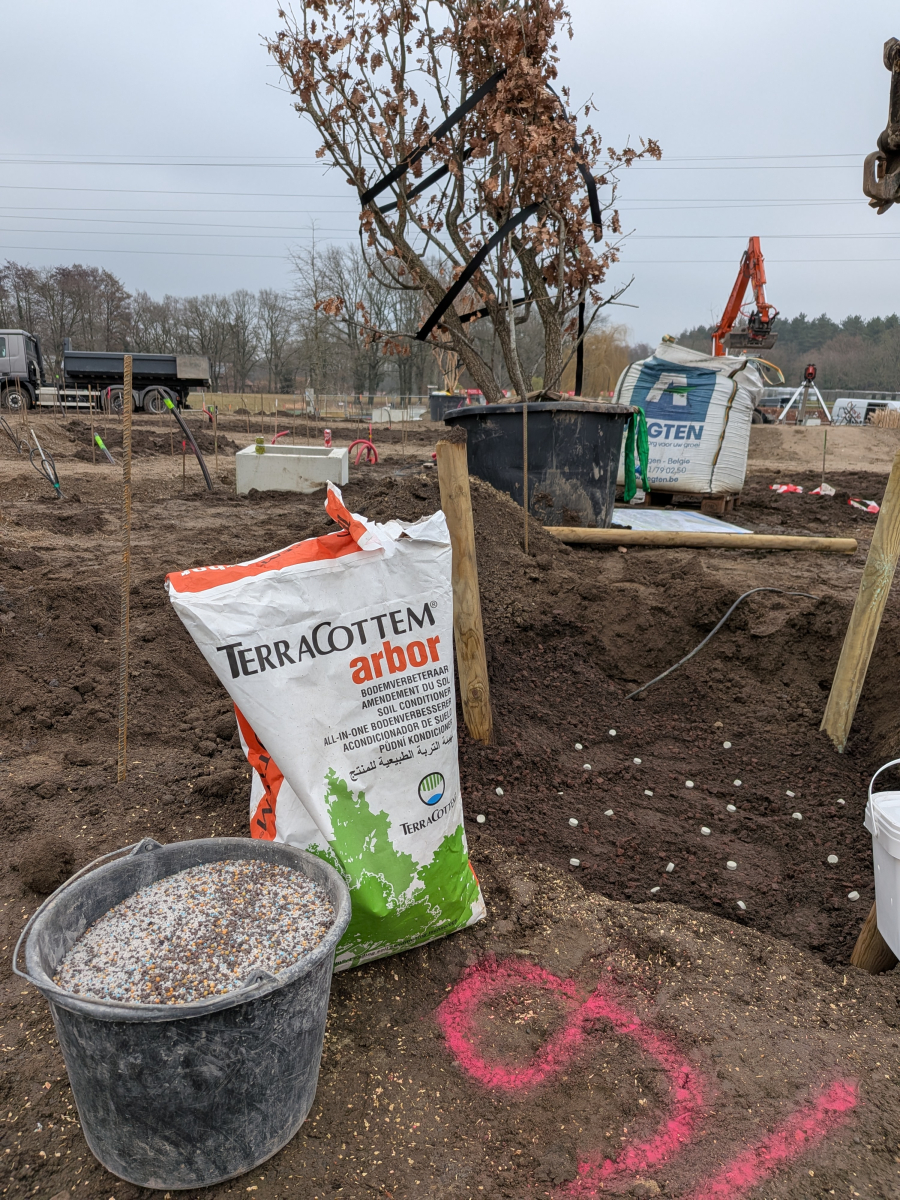
| TerraCottem Arbor is mixed into the soil once, when trees and shrubs are planted. It stimulates root development and buffers water in the root zone, which helps ensure good establishment, reduces the risk of failure and minimises the need for aftercare. |
So water is also retained in the soil, but does the water management at Outspiration go much further?
Leen: Among other things, we have created two wadis and an infiltration zone. This wasn’t a requirement for this project, but we deliberately wanted to take on an educational role and show visitors what is possible.
In addition, we have an irrigation system linked to a weather station. If rain is forecast, we stop watering the day before. In this way, we also try to avoid unnecessary irrigation.
The trees are also on a separate irrigation circuit. They are watered less frequently, but receive more water each time, so that the roots are encouraged to grow deeper rather than remaining close to the surface.
If you look at the garden a few months after it was laid out: what stands out?
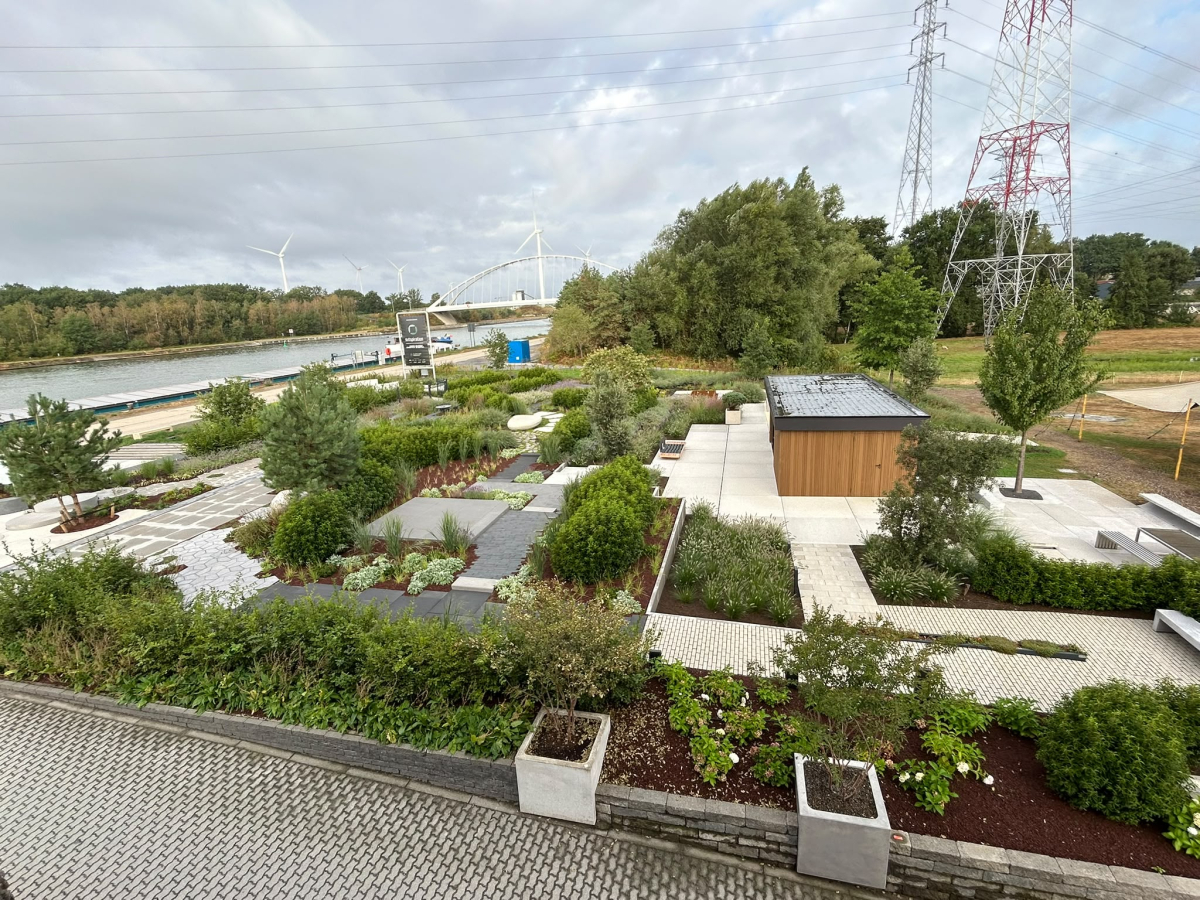
Bjorn: The difference is enormous. If you compare the photos taken just after it was laid out with how the garden looks a few months later, you can see how well the plants have established themselves.
And we’ve had a tough summer. Yet we’re seeing very little plant loss and excellent plant growth.
For me, that’s also the message of this garden. It’s not down to a single product or a single intervention. You have to get the whole picture right: soil, choice of plants, soil life, water management, irrigation…
If you build on that foundation, you’ll see what’s possible.
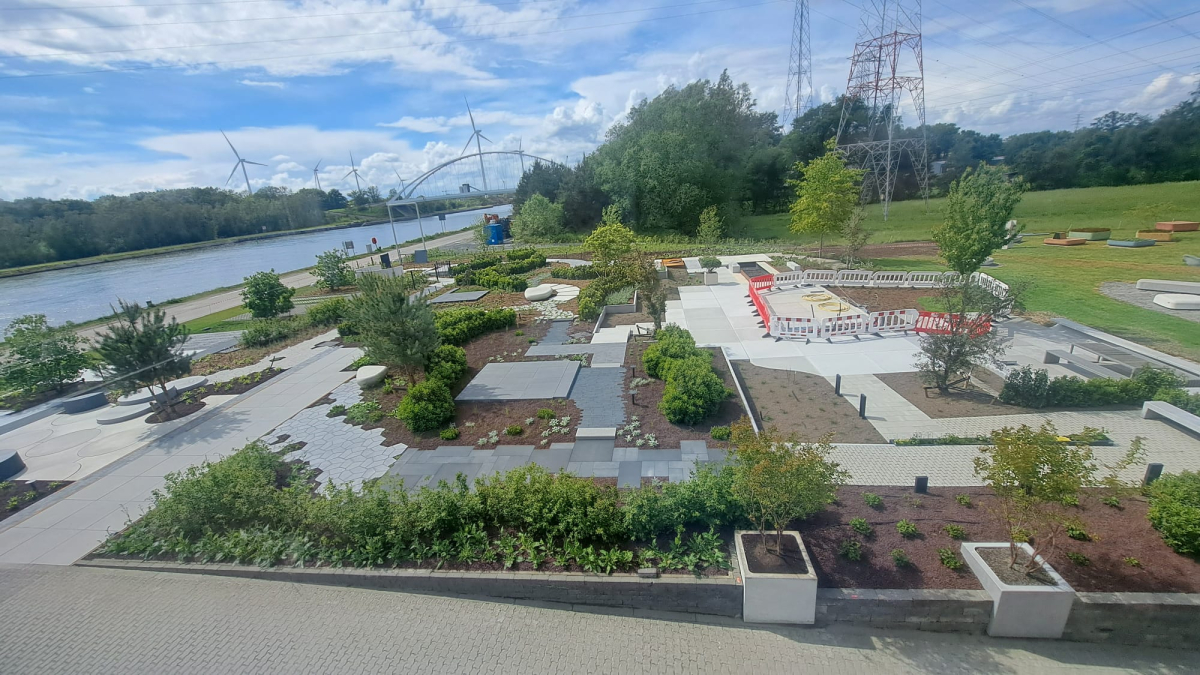
| May 2026 |
| August 2026 |
Outspiration now features noticeably more greenery than the former show garden. Was that a deliberate choice?
Leen: Absolutely. The entire garden still covers around 2,800 m². We used to have about 2,000 m² of hardstanding; today, that’s down to around 1,000 m². For a concrete manufacturer, that’s naturally quite a significant shift. We still want to sell concrete and hardstanding, but we also recognise that greenery is playing an increasingly important role.
In my view, the garden of the future will focus more on greenery, water retention and biodiversity. That doesn’t mean every garden has to become completely wild. Here, too, we deliberately combine different styles. Alongside the rustic, minimalist and Mediterranean-style gardens, we have, for example, a natural garden, where we let nature take its course. This way, every visitor can find inspiration that suits their own taste, whilst also seeing how you can make more room for greenery within very different garden styles.
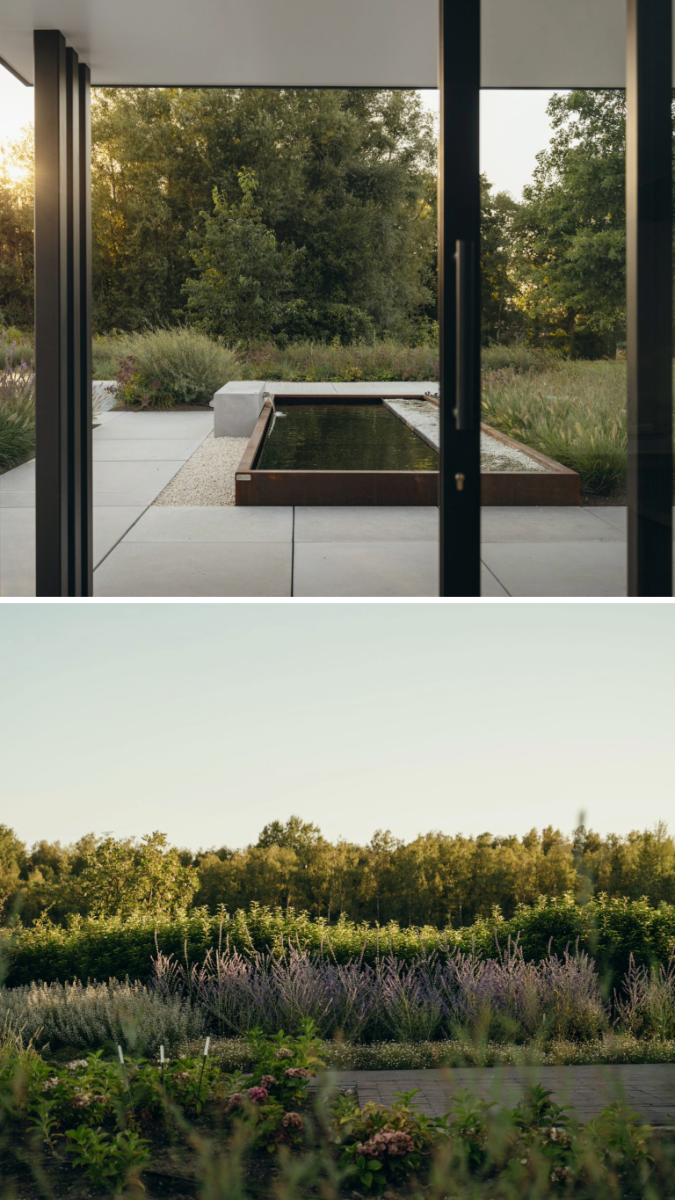
When it comes to biodiversity, we’ve been guided by Leon Brabers from Biotoop. One of his key messages is that you don’t have to completely overhaul your entire garden straight away. You can also start small. For example, you could sow a few square metres of your lawn with wilder seeds and, step by step, make more room for biodiversity.
That’s what we want to demonstrate here too: a neat garden and more space for nature don’t have to be mutually exclusive.
Bjorn: I don’t think everyone will opt for a completely wild garden overnight either. The neat look will remain. But you can also integrate much more greenery into a neat garden. And perhaps you can leave a small area a bit more natural in other places.
The clear message, above all, is: give greenery more space again.
What do you hope visitors will ultimately take away from Outspiration?
Leen: That concrete and greenery can coexist in perfect harmony. We want to inspire people with different styles, paving and planting, whilst at the same time teaching them about biodiversity, water retention, wadis, irrigation and also the soil.
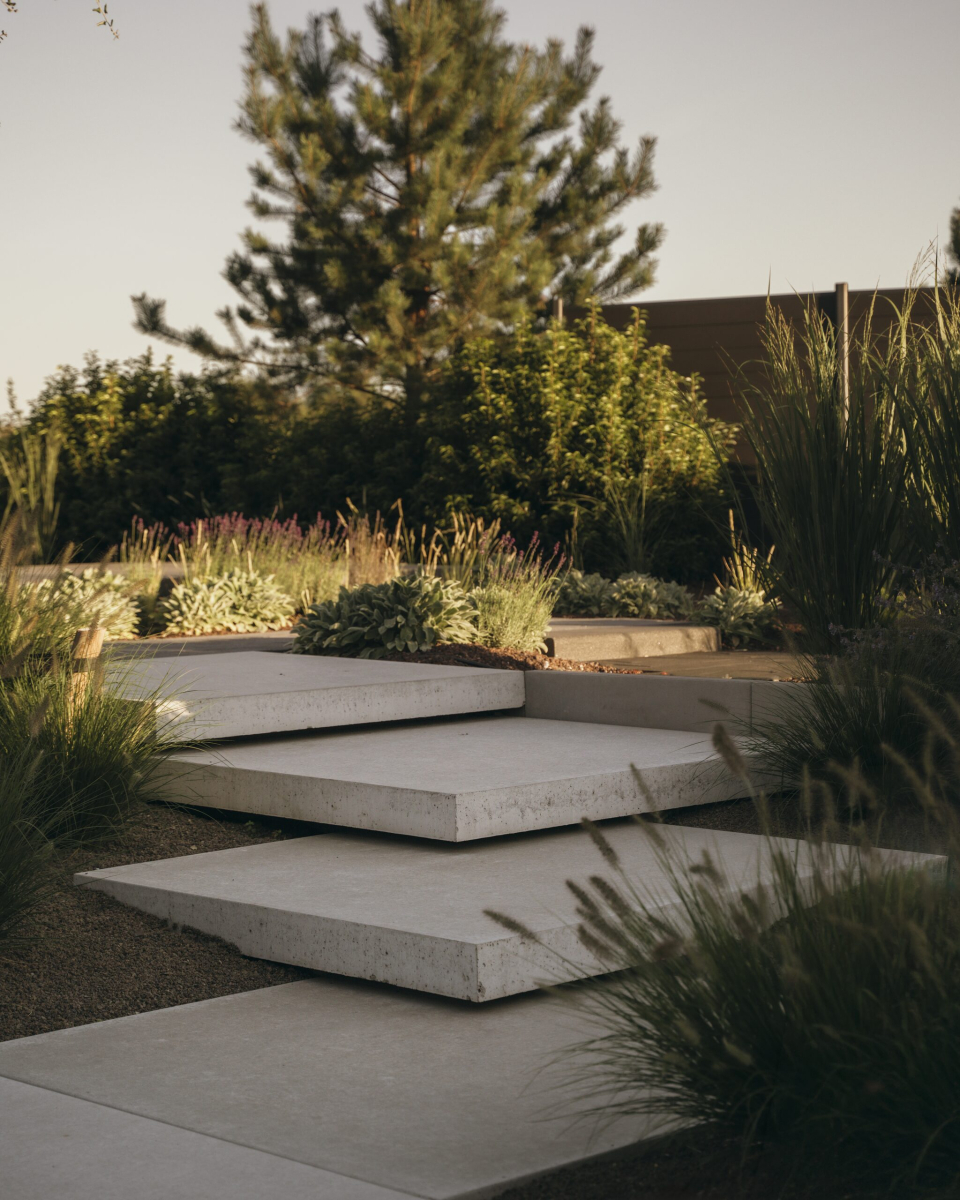
Visitors will also soon be able to access more information via QR codes about the different zones and the choices we’ve made.
Bjorn, what do you think Outspiration demonstrates about the importance of the soil?
Bjorn: That with the right foundation, you can really make a difference. Start with a soil analysis, see what the soil needs, and tailor your choice of plants and the rest of your approach accordingly.
We’ve had a tough summer, and yet you can see how strongly the plants have grown in such a short time and how little loss there has been.
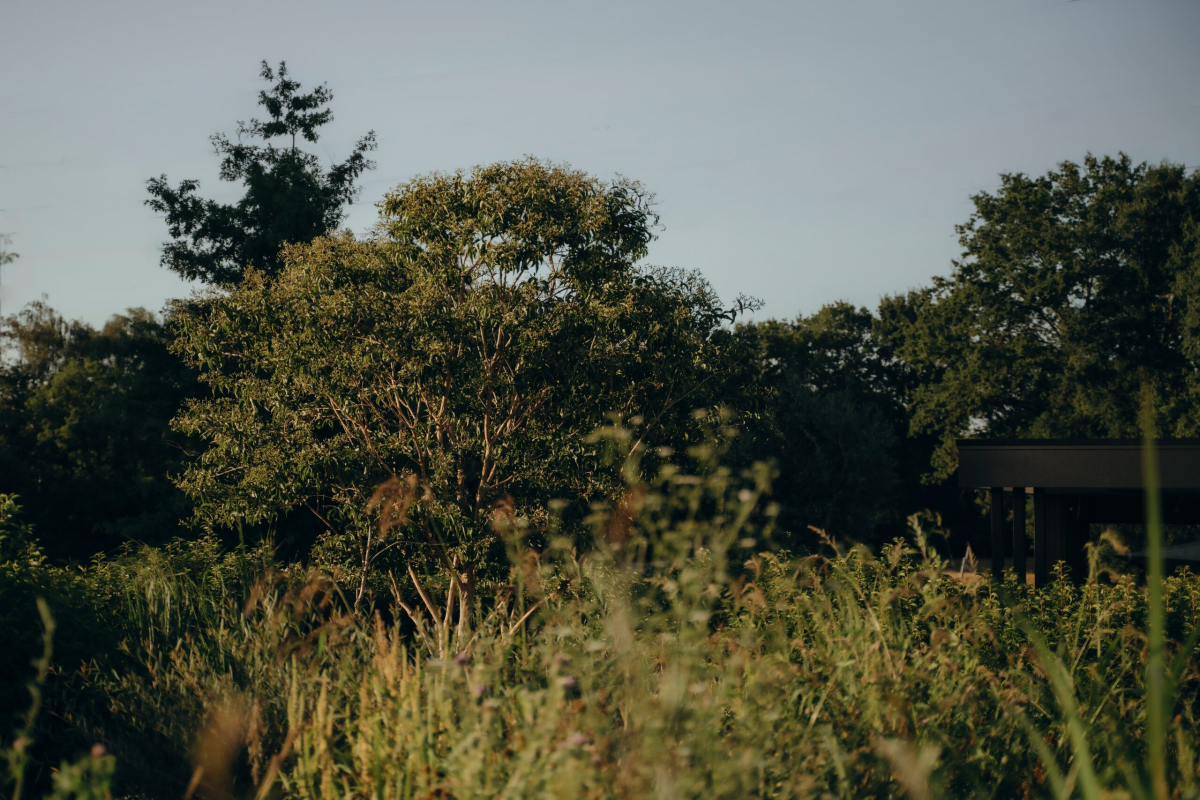
The soil story might not be the first thing you notice when you walk around here.
"But without that solid foundation, we would never have been able to achieve the same result."
If you know someone who might find this article useful, feel free to share the link.
If you’d like to experience Outspiration for yourself, book your visit here:
