
Cómo TerraCottem almacena agua y ayuda a las plantas a resistir la sequía
04/06/2026 - 11:59
TerraCottem es un «acondicionador físico del suelo». Todo un trabalenguas. En términos sencillos, se trata de una enmienda del suelo. Cuando se piensa en TerraCottem, normalmente se asocia con su extraordinaria capacidad de retención de agua. Por eso se utiliza ampliamente para ayudar a las plantas a soportar el estrés hídrico. Esta característica es tan destacada que, en ocasiones, TerraCottem se percibe simplemente como un polímero hidroabsorbente. Sin embargo, la realidad es mucho más interesante. En este artículo, comparamos la capacidad de retención de agua de TerraCottem con la de otros acondicionadores de suelo. ¿Cuánta agua puede absorber realmente TerraCottem? Y lo que es más importante, ¿cuánta de esa agua permanece realmente disponible para la planta? Demostramos que casi toda el agua absorbida permanece disponible para las plantas, algo que no es tan evidente como parece. Por último, veremos qué significa esto en la práctica a través de varios ejemplos reales.
Lo primero es lo primero... TerraCottem es un acondicionador de suelo, no un polímero
Los acondicionadores de suelo TerraCottem son mucho más que un simple polímero.
Lo que hace que TerraCottem sea único es la interacción sinérgica de todos sus componentes. Los polímeros que absorben agua, los nutrientes minerales, los fertilizantes y los estimuladores del crecimiento trabajan juntos para maximizar el enraizamiento y el desarrollo de las plantas.
Aunque el ahorro de agua es sin duda una de las grandes ventajas de TerraCottem, los profesionales también lo valoran por favorecer un sistema radicular más fuerte, un crecimiento más vigoroso, plantas más sanas y una reducción significativa de las pérdidas tras la plantación.
En este artículo descubrirás qué diferencia a TerraCottem de los hidroretenedores convencionales:

→ O echa un vistazo a este video corto:
Pero volvamos al tema principal de este artículo...
TerraCottem puede absorber mucha agua... Muchísima
¿Cuánta agua puede absorber exactamente? Pongamos a prueba tus conocimientos con un pequeño test. 😉
En la foto de abajo, de izquierda a derecha, puedes ver 100 g de arena, 100 g de roca volcánica, 100 g de arcilla, 100 g de tierra para macetas y 100 g de TerraCottem universal.
¿Cuánta agua crees que puede retener cada uno de estos materiales?

En otras palabras, cada muestra SECA se satura completamente con agua y luego se vuelve a pesar. La diferencia entre el peso HÚMEDO y el SECO indica cuánta agua se retiene; en otras palabras, su capacidad de retención de agua.
¿Preparado para los resultados?
- Arena: ± 110 g de agua por cada 100 g de material
- Partículas grandes con una superficie relativamente pequeña.
- Roca volcánica: ± 115 g de agua por cada 100 g de material
- Estructura porosa: almacenamiento adicional de agua en los poros y una superficie ligeramente mayor.
- Arcilla: ± 145 g de agua por cada 100 g de material
- Partículas muy pequeñas con una gran superficie.
- Estructura en capas (en forma de placas) que proporciona superficie y espacio de almacenamiento adicionales.
- Las superficies con carga negativa forman enlaces de hidrógeno con las moléculas de agua.
- Sustrato para macetas: ± 190 g de agua por cada 100 g de material
- Rico en materia orgánica, lo que crea una estructura esponjosa que absorbe y retiene el agua.
- TerraCottem universal: ± 9 000 g de agua por cada 100 g de material
- Contiene aproximadamente un 40 % de polímeros que absorben agua.
- Cadenas moleculares extremadamente largas con numerosos grupos hidrófilos que atraen y se unen a las moléculas de agua mediante enlaces de hidrógeno.
- Estructura polimérica tridimensional que se hincha y almacena grandes cantidades de agua.
¿Quieres profundizar un poco más? Debajo del gráfico encontrarás una explicación detallada:
 |
|
→ Hemos preparado este breve vídeo para resumirlo todo:
Más del 95 % del agua está disponible para las plantas
La cantidad total de agua que se puede absorber no siempre es el parámetro más relevante. Una mayor capacidad de retención de agua (WRC) no significa necesariamente que haya más agua disponible para las plantas (PAW). Al fin y al cabo, no toda el agua absorbida está disponible para las plantas:
- Parte del agua se retiene de forma demasiado laxa y se drenará por influencia de la gravedad.
- Otra parte puede retenerse con tanta fuerza que las raíces de las plantas no puedan generar suficiente fuerza de succión para absorberla en sus células.
¿Sabías que los polímeros superabsorbentes también se utilizan en los pañales? Estos polímeros están diseñados específicamente para retener prácticamente toda el agua con gran fuerza. Esto tiene mucho sentido: de lo contrario, los pañales tendrían fugas y no cumplirían su función.
Lamentablemente, también existen hidroretenedores similares en productos de horticultura y paisajismo. El problema es que gran parte del agua que almacenan queda retenida con demasiada fuerza y deja de estar disponible para las plantas.
Los polímeros hidroabsorbentes utilizados en TerraCottem son diferentes. En nuestras formulaciones combinamos varios polímeros de alta calidad cuidadosamente seleccionados por sus propiedades complementarias. Su objetivo no es únicamente almacenar agua, sino sobre todo mantenerla disponible para las plantas.
¿Te interesa entender mejor cómo se determina el agua disponible para las plantas? Descúbrelo en nuestro artículo del blog:
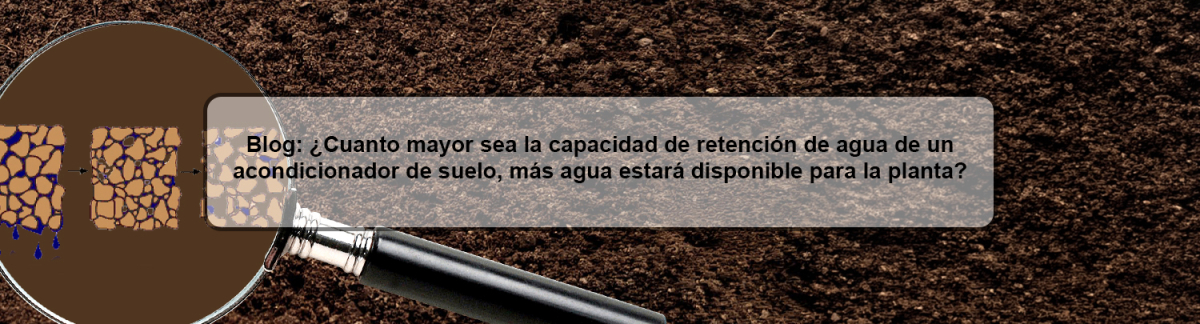
Descubre en este breve vídeo animado cómo funciona el agua disponible para las plantas y por qué desempeña un papel tan importante:
Una alta retención de agua combinada con la máxima cantidad de agua disponible para las plantas:
¿qué significa esto en la práctica?
Hasta un 50 % menos de necesidades de riego 💧
 |
Los acondicionadores de suelo TerraCottem pueden almacenar grandes cantidades de agua y mantenerla disponible para las plantas cuando más la necesitan. ¿El resultado? Se necesita mucho menos riego. |
La cantidad de agua adicional que se puede retener varía considerablemente en función de la aplicación y las condiciones de cultivo.
Los usuarios de TerraCottem reportan ahorros de agua de hasta un 50 %.
Un ejemplo práctico:
El Ayuntamiento de Townsville, Queensland (Australia), quería desarrollar su zona costera de forma sostenible. Dado que la conservación del agua es un componente importante de la gestión medioambiental sostenible, el ayuntamiento decidió incorporar TerraCottem al proyecto para ayudar a alcanzar este objetivo.
Se estableció un presupuesto de riego para los primeros diez años del proyecto. La asignación presupuestaria se escalonó a lo largo del tiempo: un 30 % para el primer año, un 20 % para el segundo, un 10 % para el tercero y el cuarto, y el 30 % restante repartido entre los últimos seis años.
Dado que TerraCottem proporciona beneficios duraderos, el objetivo era lograr una reducción del 50 % en el consumo de agua de riego a lo largo de todo el periodo de diez años.
Los costes reales de riego se supervisaron y registraron cada seis meses:
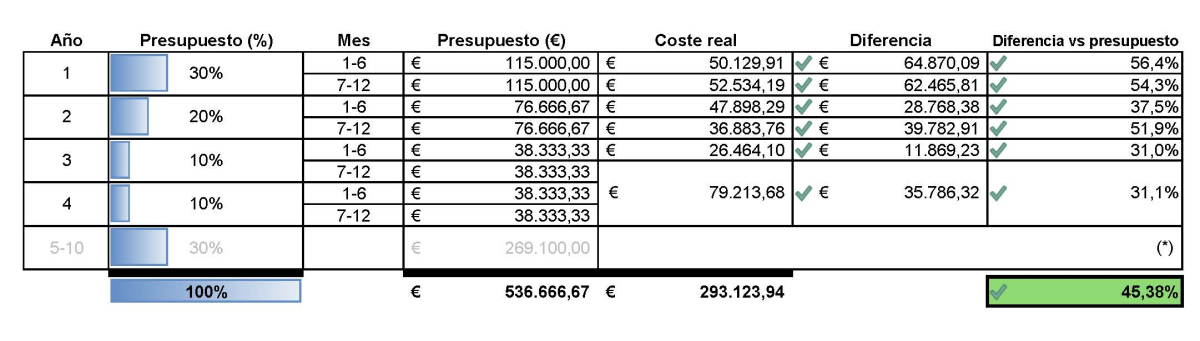
¿El resultado? Se registró un ahorro acumulado de agua de más del 45 % a lo largo de todo el periodo del proyecto.
(*) Tras cuatro años, el éxito de TerraCottem quedó claramente demostrado. El proyecto se amplió con nuevas zonas de plantación. Dado que estas nuevas zonas se conectaron a la misma red de riego, ya no fue posible supervisar por separado las parcelas de ensayo originales.
→ Podemos preparar un análisis detallado de costes y beneficios adaptado a tu proyecto. Sólo tienes que rellenar nuestro formulario web y nuestro equipo estará encantado de ayudarte.
Raíces más fuertes, mayor resistencia a la sequía 🌱
Además de los polímeros hidroabsorbentes que aumentan la retención de agua, los estimuladores del crecimiento también desempeñan un papel importante a la hora de ayudar a las plantas a hacer frente al estrés hídrico.
Estos estimuladores del crecimiento, o bio estimulantes, actúan a nivel celular. En pocas palabras, favorecen el desarrollo de sistemas radiculares más extensos y profundos. Esto permite a las plantas acceder a un mayor volumen de suelo en el que buscar agua disponible.
¿El resultado? Las plantas soportan mejor los periodos de sequía y tardan mucho más en marchitarse.
Decidimos ponerlo a prueba utilizando dos lirios de la paz (Spathiphyllum) y una cámara de lapso de tiempo.
- Se incorporó TerraCottem al sustrato de la planta de la derecha a una dosis de 5 g/l de mezcla de cultivo.
- Se utilizó el mismo sustrato para la planta de la izquierda, que sirvió como control sin tratar.
- Ambas plantas recibieron exactamente la misma cantidad de agua.
- Se regaron sólo una vez, tras lo cual se dejó que el suelo se secara de forma natural.
Mira lo que ocurrió:
Este efecto no se limita a las plantas cultivadas en macetas. El mismo principio aplica para las plantas que crecen a cielo abierto.
Un buen ejemplo de la vida real
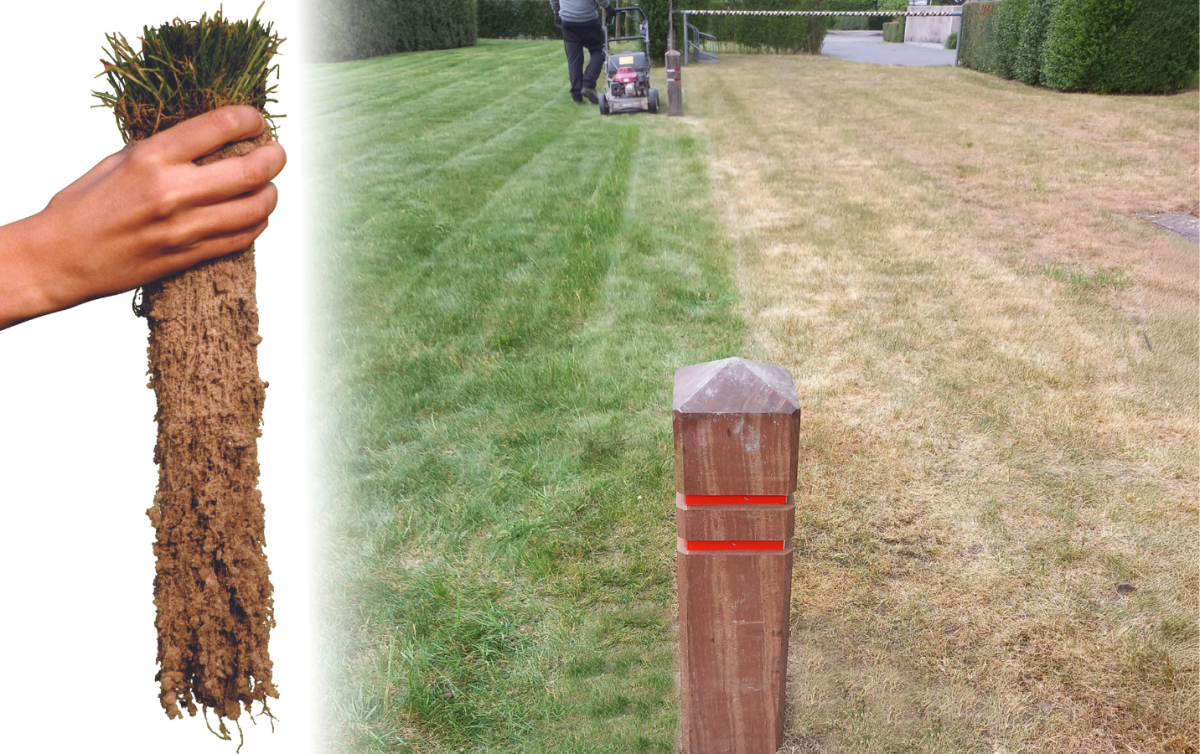
Al paisajista Peter Saeys, de Gardenstate, le encargaron instalar un nuevo césped para uno de sus clientes. Casualmente, el vecino tuvo exactamente la misma idea...
- Ambos céspedes se sembraron al mismo tiempo.
- El vecino no utilizó TerraCottem; Peter sí.
- Ambos céspedes germinaron con éxito y se convirtieron en un césped sano y denso.
Sin embargo, el verano siguiente trajo consigo un prolongado periodo de sequía extrema. ¿Adivinas cuál de los dos céspedes de la foto fue tratado con TerraCottem?
→ También hemos publicado un interesante artículo sobre los jardines de Peter Saeys en nuestro blog. ¡No te lo pierdas!
Mayores tasas de supervivencia tras la plantación 🌿
La reposición de árboles, arbustos, plantas perennes y setos que no sobreviven tras la plantación es un problema que cualquier responsable de zonas verdes intenta minimizar al máximo. No solo genera costes y mano de obra adicionales, sino que también puede afectar negativamente al aspecto y la calidad de un proyecto.
Aunque es prácticamente imposible evitar por completo las marras tras la plantación, el uso de TerraCottem permite reducir significativamente su porcentaje.
Ahorro de costes
Para mantener la tasa de sustitución de árboles por debajo del 10 %, la ciudad de Oudenaarde, en Bélgica, invierte principalmente en medidas relacionadas con el agua a la hora de plantar árboles. Al replantar los 125 árboles que habían fracasado en los tres años anteriores debido a condiciones climáticas extremadamente secas, la ciudad invirtió en anillos de riego para el almacenamiento de agua en superficie y en el acondicionador de suelo TerraCottem arbor, destinado a favorecer el crecimiento y actuar como reserva de agua alrededor de las raíces de los árboles.
Si se tiene en cuenta que el coste medio anual por árbol para la ciudad de Oudenaarde es de 332,00 €, mientras que la inversión mencionada asciende a solo 35,00 € por árbol (26,00 € por el anillo de riego y 9,00 € por el acondicionador de suelo), queda claro que esta inversión tendrá un impacto positivo en el coste total de la sustitución de árboles a largo plazo.
Un cálculo rápido: en 2021, el coste de la sustitución de árboles ascendió a 125 árboles × 332,00 € por árbol = 41 500,00 €! Gracias a las inversiones mencionadas, se logró un ahorro de más de 37 000,00 €.

Plantas más sanas y frondosas 🌳
TerraCottem actúa directamente en la zona radicular, favoreciendo el crecimiento, la salud y la tolerancia a la sequía de las plantas.
El Ayuntamiento de Portsmouth, en el Reino Unido, evaluó este efecto en dos zonas demostrativas con parterres florales, cada una compuesta por una zona tratada con TerraCottem y otra zona de control sin tratar, ambas sometidas al mismo régimen de riego.
¿El resultado? Compruébalo tú mismo:
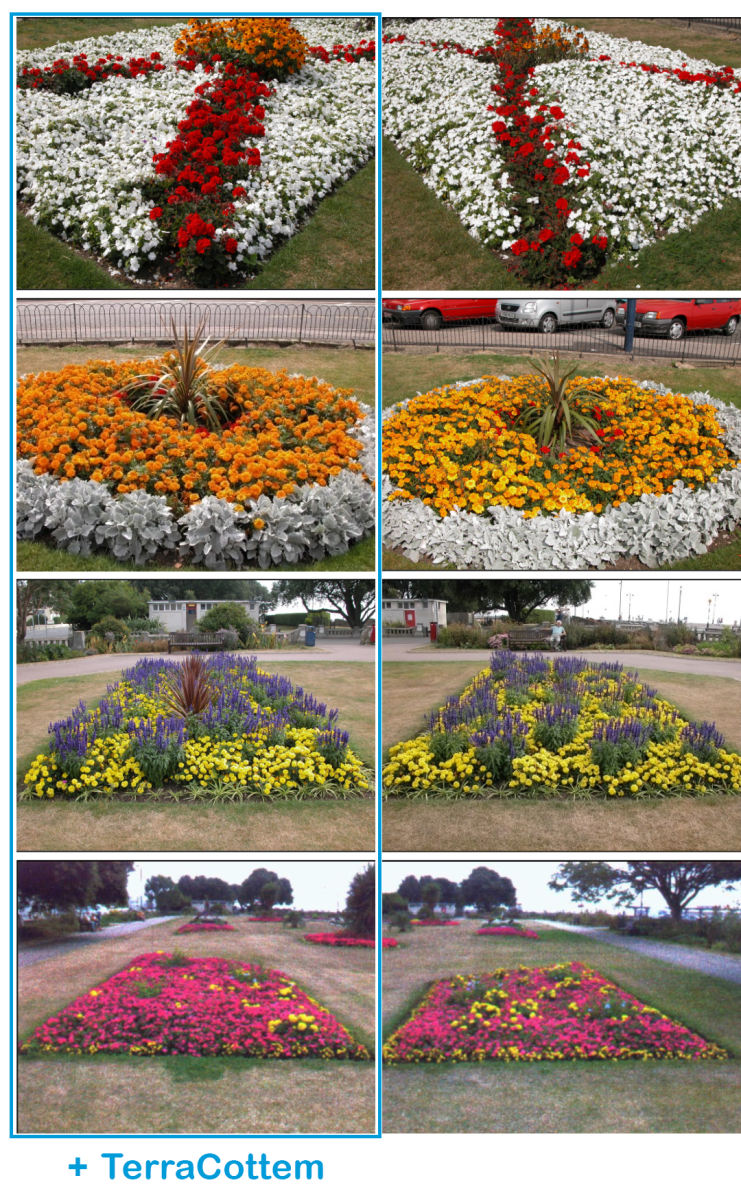
- En los parterres tratados con TerraCottem, el geranio «Eclipse Red» produjo un número notablemente mayor de flores y mostró un marchitamiento significativamente menor. También se observó una clara diferencia en la rudbeckia «Marmalade».
- La caléndula «Solar Orange», la caléndula «Solar Sulphur», la salvia «Victoria» y la cordilina también obtuvieron resultados sustancialmente mejores con TerraCottem: las flores eran considerablemente más grandes que las de los parterres de control sin tratar.
- Además, las plantas de Begonia «Olympia Rose» cultivadas con TerraCottem alcanzaron una mayor altura y proporcionaron una cobertura del suelo notablemente mejor.
En un mundo donde el agua es cada vez más valiosa, el crecimiento sostenible comienza bajo tierra.
Gestionando el suelo y el agua de forma inteligente, no solo das a las plantas un mejor comienzo, sino también una mayor capacidad de adaptación frente a la sequía.
TerraCottem te ayuda a construir hoy espacios verdes más resilientes y sostenibles para el mañana.