
How TerraCottem Stores Water and Protects Plants Against Drought
04/06/2026 - 11:59
TerraCottem is a “physical soil conditioner”. Quite a mouthful. In simple terms, it is a soil amendment. When people think of TerraCottem, they often associate it with its remarkable ability to retain water. This is why it is used worldwide to help plants withstand drought stress. As a result, TerraCottem is sometimes reduced to being “a water-retaining polymer”. In reality, the story is far more interesting. In this article, we compare the water retention capacity of TerraCottem with that of other soil conditioners. How much water can TerraCottem actually absorb? More importantly, how much of that water remains truly available to the plant? We demonstrate that almost all of the absorbed water remains available for plant uptake—something that is far from self-evident. Finally, we will look at what this means in practice through several real-life applications.
First things first... TerraCottem is a soil conditioner, not a polymer
TerraCottem soil conditioners are much more than a simple polymer or water-retaining crystal.
What makes TerraCottem unique is the synergetic interaction of all its components. Water-absorbing polymers, mineral nutrients, fertilisers and growth stimulators work together to maximise plant establishment and development.
While water saving is undoubtedly one of TerraCottem’s key benefits, professional users value it just as highly for its ability to promote stronger root development, more vigorous plant growth, healthier plants and significantly lower plant losses.
In this article, you'll discover what sets TerraCottem apart from conventional water-absorbing polymers:
→ Or take a look at this short video:
But let’s get back to the main topic of this article...
TerraCottem can absorb a lot of water... A whole lot
Just how much water can it absorb? Let’s put your knowledge to the test with a quick quiz. 😉
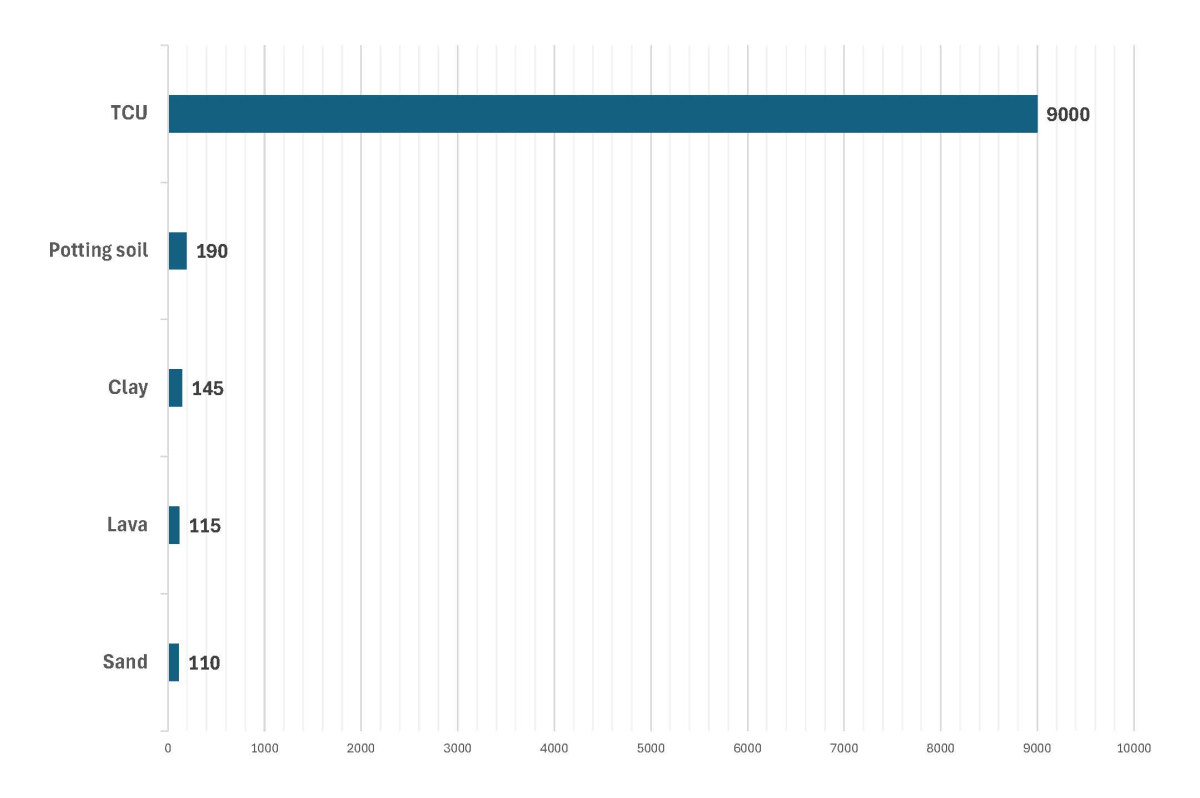
In the photo below, from left to right, you can see 100g of sand, 100g of lava rock, 100g of clay, 100g of potting soil and 100g of TerraCottem universal.
How much water do you think each of these materials can retain?

In other words, each DRY sample is fully saturated with water and then weighed again. The difference between the WET and DRY weight indicates how much water is being retained — in other words, its water retention capacity.
Ready for the results?
- Sand: ± 110g water per 100g material
- Large particles with relatively little surface area.
- Lava rock: ± 115g water per 100g material
- Porous structure: additional water storage in the pores and a slightly larger surface area.
- Clay: ± 145g water per 100g material
- Very small particles with a large surface area.
- Layered (plate-like) structure providing additional surface area and storage space.
- Negatively charged surfaces form hydrogen bonds with water molecules.
- Potting soil: ± 190g water per 100g material
- Rich in organic matter, creating a sponge-like structure that absorbs and retains water.
- TerraCottem universal: ± 9,000g water per 100g material
- Contains approximately 40% water-absorbing polymers.
- Extremely long molecular chains with numerous hydrophilic groups that attract and bind water molecules through hydrogen bonding.
- Three-dimensional polymer structure that swells and stores large quantities of water.
Want to learn more? You'll find a detailed explanation below the graph:
 |
|
→ We’ve broken it down for you in the short video below:
More than 95% plant-available water
The total amount of water that can be absorbed is not always the most relevant parameter. A higher Water Retention Capacity (WRC) does not necessarily mean that more Plant-Available Water (PAW) is present. After all, not all absorbed water is available to plants:
- Some of the water is held too loosely and will drain away under the influence of gravity.
- Another portion may be held so tightly that plant roots cannot generate enough suction force to absorb it into their cells.
Did you know that superabsorbent polymers are also used in diapers? These polymers are specifically designed to bind virtually all water very strongly. That makes perfect sense: otherwise diapers would leak and fail to perform their function.
Unfortunately, similar types of polymers can also be found in horticultural and landscaping products. As a result, only a limited proportion of the absorbed water may actually be available to plants.
The water-absorbing polymers used in TerraCottem are different. In fact, we use several carefully selected, high-quality polymer types in our formulations. These polymers have been engineered to maximize plant-available water, ensuring that more than 95% of the absorbed water remains available for uptake by plant roots.
Interested in learning more about soil physics and how plant-available water is measured? Read our blog article:
Watch this short, animated video to learn how plant-available water works and why it matters:
High water retention combined with maximum plant-available water:
what does this mean in practice?
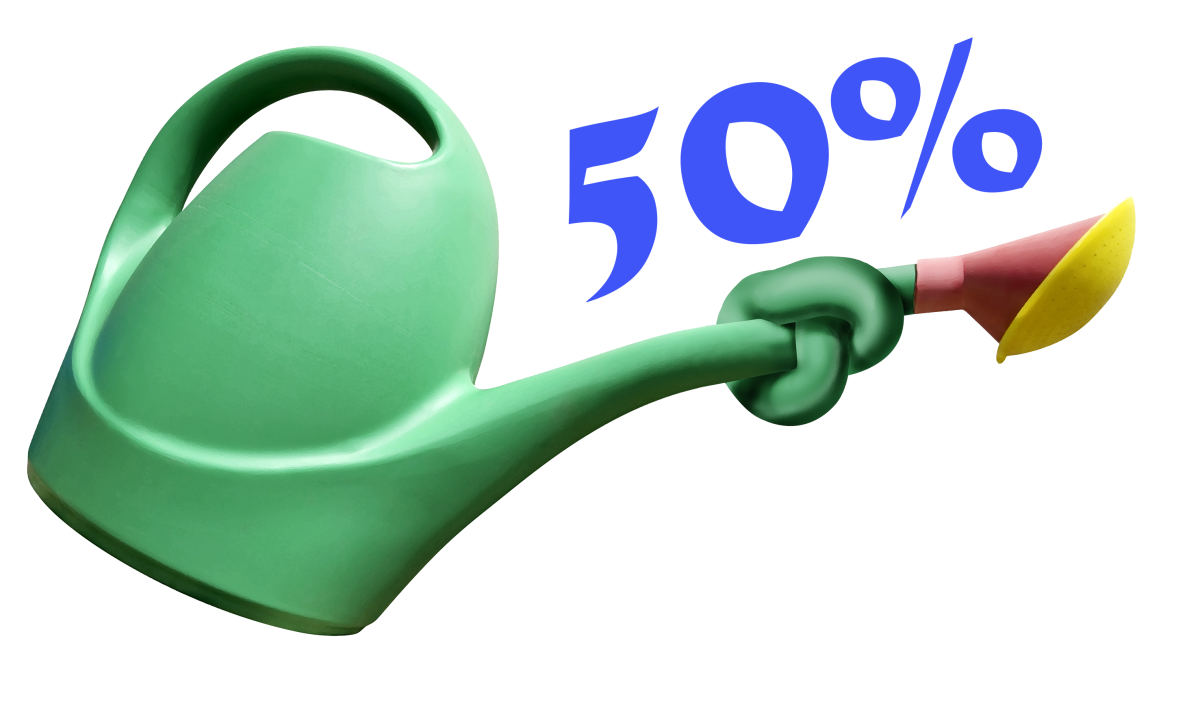
Up to 50% lower irrigation requirements 💧
 |
TerraCottem soil conditioners can retain large amounts of water, while keeping almost all of that water available for plant uptake whenever it is needed. The logical result: significantly less irrigation is required. |
How much additional water can be retained varies considerably depending on the application and growing conditions.
Long-term TerraCottem users report water savings of up to 50%.
A practical example:
The City Council of Townsville, Queensland, Australia, wanted to develop its waterfront in a sustainable manner. As water conservation is an important component of sustainable environmental management, the council decided to incorporate TerraCottem into the project to help achieve this objective.
An irrigation budget was established for the first ten years of the project. The budget allocation was phased over time: 30% for year one, 20% for year two, 10% for years three and four, and the remaining 30% spread over the final six years.
Because TerraCottem provides long-lasting benefits, the target was to achieve a 50% reduction in irrigation water use over the entire ten-year period.
Actual irrigation costs were monitored and recorded every six months:
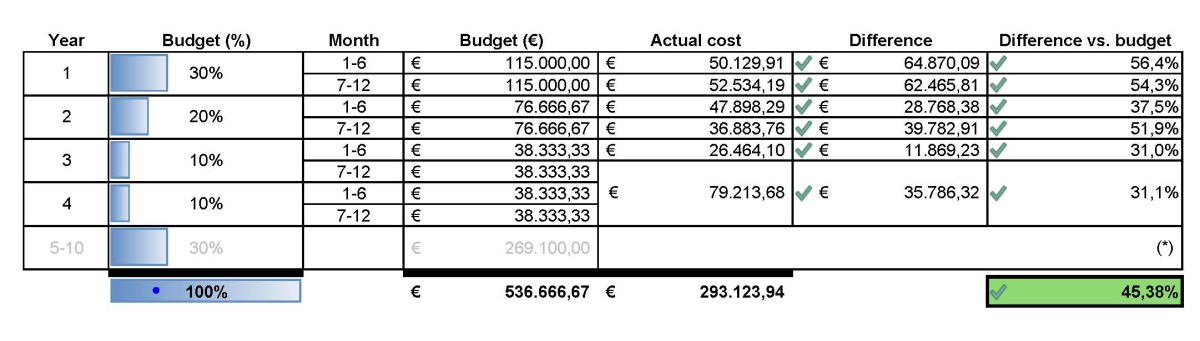
The result? A cumulative water saving of more than 45% was recorded over the entire project period.
(*) After four years, the success of TerraCottem was clearly demonstrated. The project was expanded, with additional planting areas. As these new areas were connected to the same irrigation network, the original trial plots could no longer be monitored separately.
→ We can prepare a detailed cost-benefit analysis tailored to your project. Simply fill in our webform and our team will be happy to assist you.
Stronger roots, better resistance to drought 🌱
In addition to the hydroabsorbant polymers that increase water retention, the root growth stimulators also play an important role in helping plants cope with drought stress.
These growth stimulators, or bio stimulants, act at the cellular level. Put simply, they promote the development of more extensive and deeper root systems. This gives plants access to a larger soil volume in which to search for available water.
The result? Plants can withstand water stress and wilting for much longer.
We decided to put this to the test using two Peace Lilies (Spathiphyllum) and a time-lapse camera.
- TerraCottem was incorporated into the potting soil of the plant on the right at a rate of 5g/L of potting mix.
- The same potting soil was used for the plant on the left, which served as the untreated control.
- Both plants received exactly the same amount of water.
- They were watered only once, after which the soil was allowed to dry out naturally.
Take a look at what happened:
This effect is not limited to container-grown plants. The same principle applies to plants growing in open soil conditions.
A nice real-life example
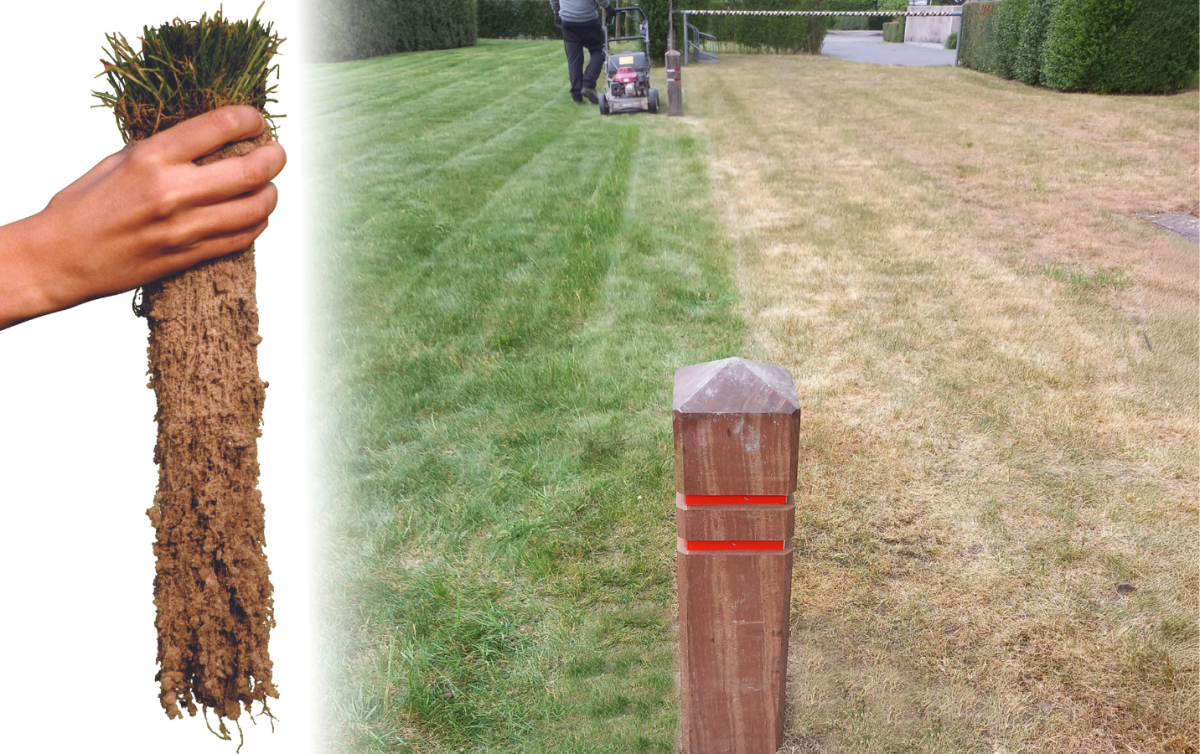
Landscape contractor Peter Saeys from Gardenstate was asked to install a new lawn for one of his clients. Coincidentally, the neighbour had exactly the same idea...
- Both lawns were seeded at the same time.
- The neighbour did not use TerraCottem; Peter did.
- Both lawns germinated successfully and developed into healthy, dense turf.
The following summer, however, brought an extended period of extreme drought.
Guess which of the two lawns in the photo was treated with TerraCottem?
→ We also published an interesting blog article about Peter Saeys’ gardens. Be sure to check it out!
Higher survival rates after planting 🌿
Replacing trees, shrubs, perennials and hedging plants that fail after planting—commonly referred to as plant replacement—is something every landscape manager wants to avoid as much as possible. Not only does it generate additional costs and labour, but it can also negatively impact the appearance and reputation of a project.
While it is virtually impossible to eliminate plant losses entirely, the percentage of failures can be significantly reduced by incorporating TerraCottem at planting.
Cost Savings
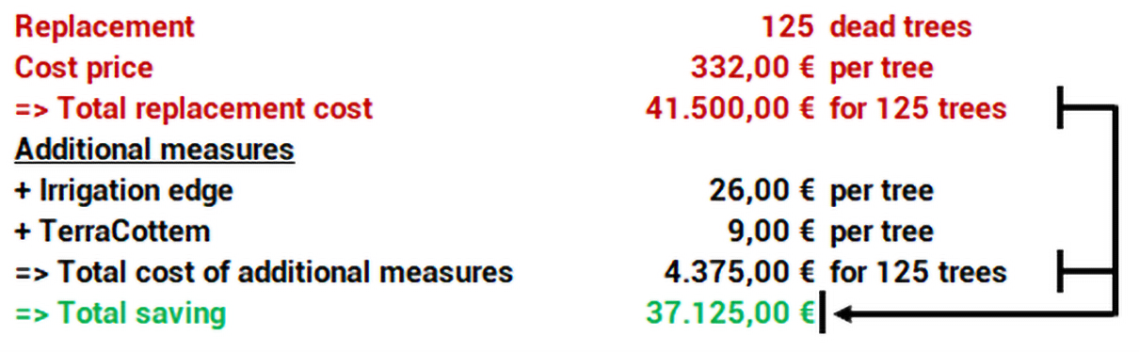
To keep the tree replacement rate below 10%, the City of Oudenaarde in Belgium invests primarily in water-related measures when planting trees. When replanting the 125 trees that had failed over the previous three years due to extremely dry weather conditions, the city invested in watering rings for above-ground water storage and TerraCottem arbor soil conditioner for growth support and water buffering around the tree roots.
When you consider that the average annual cost per tree for the City of Oudenaarde is €332.00, while the above investment amounts to only €35.00 per tree (€26.00 for the watering ring and €9.00 for the soil conditioner), it is clear that this investment will have a positive impact on the overall cost of tree replacement in the long term.
A quick calculation: in 2021, the cost of replacing trees amounted to 125 trees × €332.00 per tree = €41,500.00! Thanks to the above-mentioned investments, savings of more than €37,000.00 were achieved.
Healthier and fuller plants 🌳
TerraCottem works in the root zone, where it supports plant growth, health and drought tolerance.
Portsmouth City Council in the United Kingdom evaluated this effect at two locations with flower beds, each consisting of a TerraCottem-treated area and an untreated control area receiving the same irrigation regime.
The result? See for yourself:
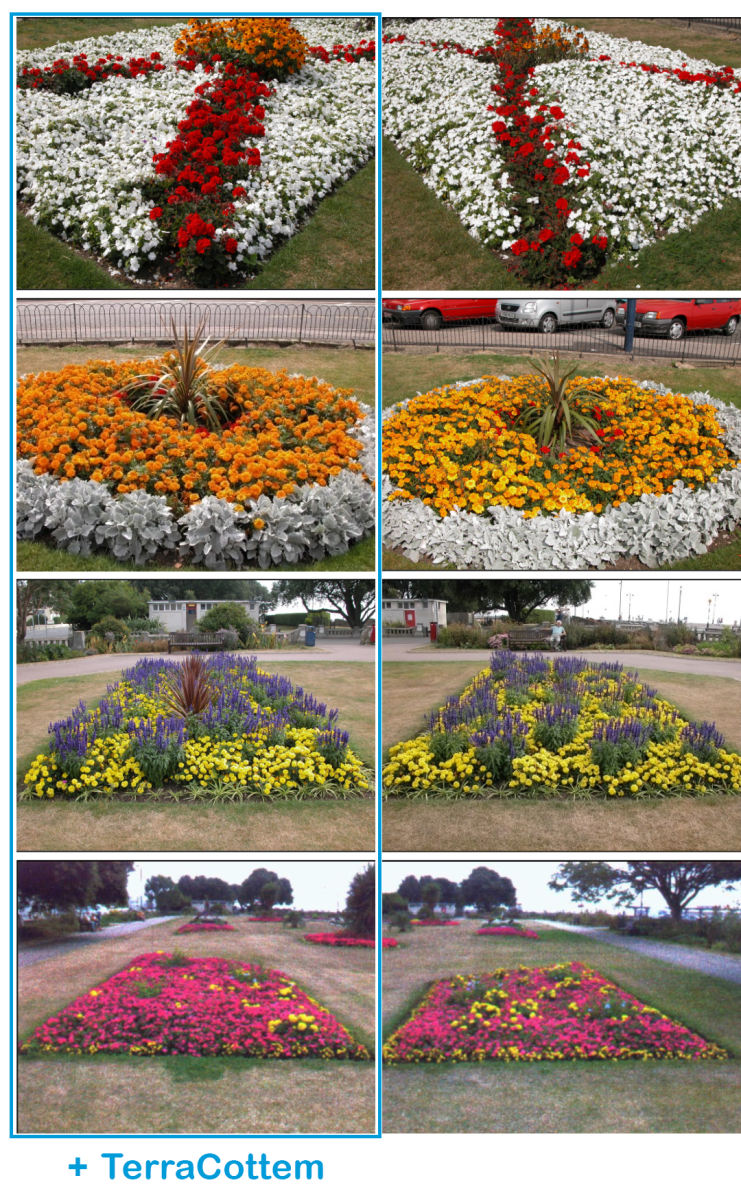
- In the TerraCottem-treated beds, the Geranium Eclipse Red produced noticeably more flowers and showed significantly less wilting. A clear difference was also observed with the Rudbeckia Marmalade.
- Marigold Solar Orange, Marigold Solar Sulphur, Salvia Victoria and Cordyline also performed substantially better with TerraCottem: the flowers were considerably larger than those in the untreated control beds.
- In addition, Begonia Olympia Rose plants grown with TerraCottem reached a greater height and provided noticeably better ground cover.
In a world where water is becoming increasingly precious...
Sustainable growth starts below the ground.
By managing soil and water wisely, you not only give plants a better start, but also a stronger future.
TerraCottem helps you make a difference today for a greener and more resilient tomorrow.