
Outspiration: An inspiring garden starts with the soil
01/01/2020 - 00:00
From a traditional paving show garden dominated by paving and stone to a green, inspiring space where hard landscaping, planting, water and biodiversity come together.
With Outspiration, Belgian concrete manufacturer EBEMA STONE & STYLE has completely transformed its former show garden.
During the construction of the garden, it soon became clear just how important what lies beneath the surface really is: the soil. A thick layer of rubble, newly delivered soil that first had to be analysed, and planting plans adapted to the soil conditions… The project became a perfect example of why a successful garden starts below ground.
We spoke to Leen Berckmans, Outspiration project manager, and Bjorn Hulsmans, product manager at Aegten, TerraCottem distributor in Belgium and one of the project partners.
Leen, Outspiration looks completely different from EBEMA’s former show garden. What were you hoping to achieve?
Leen: Our previous show garden was a bit like a supermarket for paving products. All the different types of paving were displayed side by side, but there was very little sense of what a finished garden could look and feel like. Today, people want to see how these products can be used in a real garden setting. What happens when you combine paving with plants, trees, water features, lighting and outdoor furniture…?
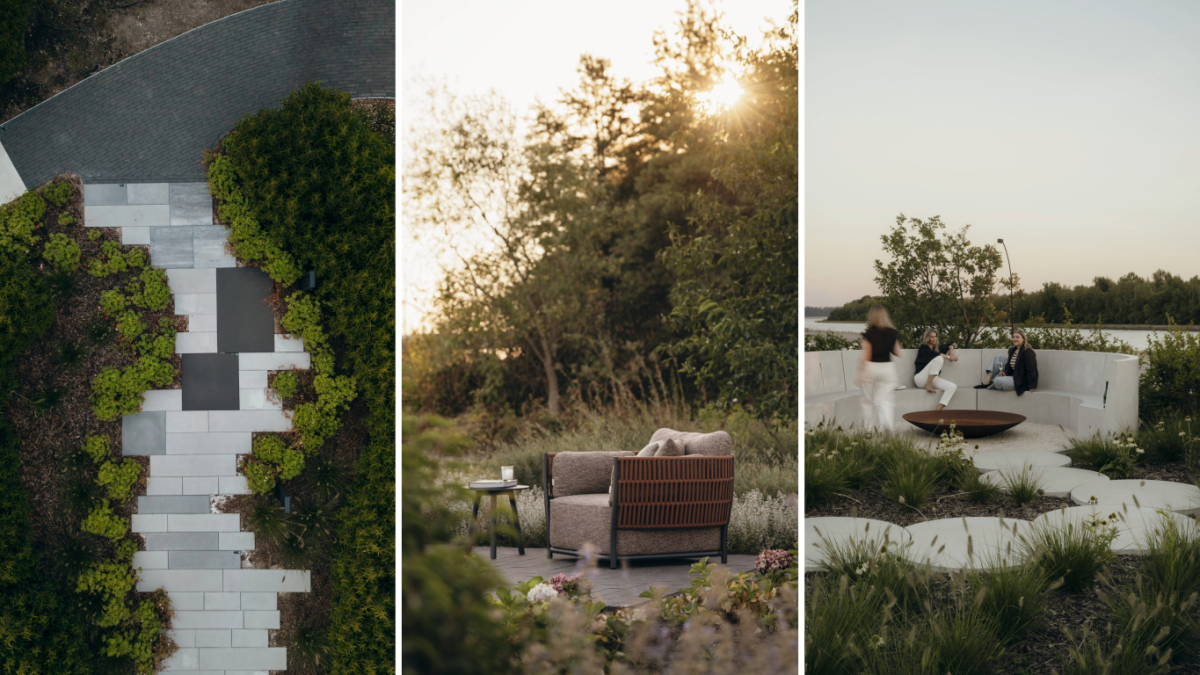
That’s why we set out to find partners with different areas of expertise. Not just for the planting, but also, for example, for the soil, irrigation and water features. That way, we were able to create a complete garden experience.
And that collaboration is essential. A good landscaping contractor has a wealth of knowledge, but can’t be an expert in every field. Bringing together specialists with different areas of expertise ultimately leads to better results.
That collaboration soon proved invaluable when you encountered an unexpected obstacle during the groundworks, didn’t it?
Bjorn: Yes. We had originally planned to excavate to a depth of around 30 cm and bring in fresh soil. But we came across a thick layer of rubble. Looking back, perhaps that wasn’t so surprising, given that most of the area had previously been paved.
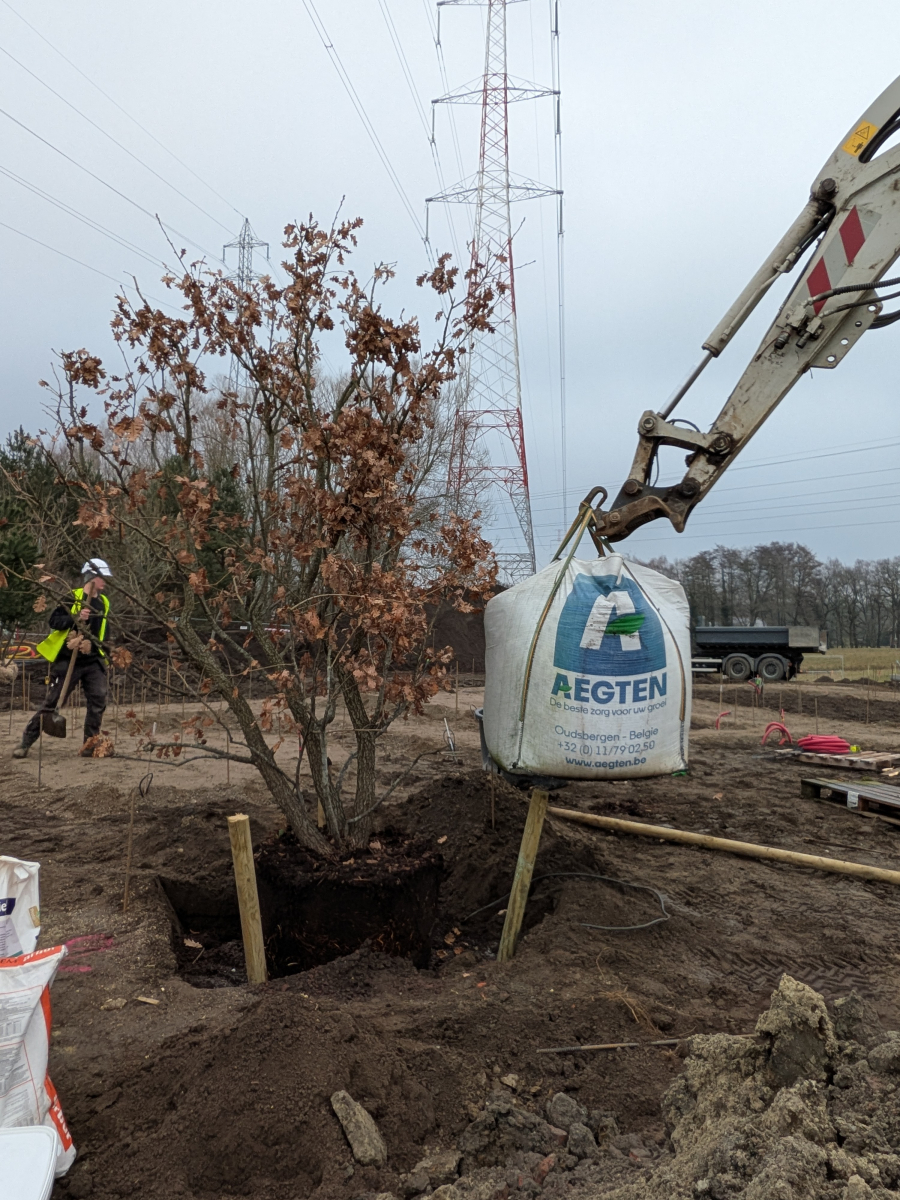
In the end, we excavated deeper and brought in entirely new soil. But of course, that was only the first step. We had the new soil analysed to determine what was needed to bring it into balance.
You say ‘of course’, but is that always done in practice?
Bjorn: No, absolutely not. In fact, that’s often where things go wrong.
People still tend to think: I’ll just bring in some fresh, dark topsoil and everything will be fine. But new soil isn’t necessarily good soil. Sometimes existing soil is excavated unnecessarily, only to be replaced with soil that’s no better.
Soil is also quite complex. Take pH, for example. Many people have a particular pH value in mind that they consider ideal. But the right pH also depends on the soil type. Without a soil analysis, you don’t really know what you’re working with.
That’s why, for us, everything starts with soil testing. What is the soil pH? Which nutrients are present? What about soil structure and biological activity?
"What does the soil need to support healthy plant growth?"
Do you think enough attention is paid to the soil in landscaping projects?
Bjorn: The soil doesn’t always receive the same attention as what’s visible above ground, even though it forms the foundation of any successful garden. And every soil is different. That’s why we prefer to start with a soil analysis. It gives us a clear picture of the existing conditions and allows us to identify exactly what’s needed.
Leen: This was also highlighted in our discussions with Mentens Nursery, who supplied the trees, shrubs and perennials for the project. Their message was simple: We can supply the most beautiful, high-quality plants, but if the soil conditions aren’t right, those plants will never reach their full potential.
That really says it all.
Did the soil conditions also influence the choice of plants?
Leen: Yes. The landscape architect had originally specified different plants, but Mentens Nursery revised some of the selections to better suit the site conditions.
Bjorn: One example is the yew originally specified. Because of the compacted layer beneath the soil, there was a risk of their roots sitting in waterlogged soil. Yews are particularly sensitive to this, so we opted for Prunus lusitanica instead.
This highlights how important it is to consider soil conditions from the outset when selecting plants for a landscaping project.
As well as improving the soil, you also used TerraCottem arbor when planting the trees. Why was that?
Bjorn: Once we had assessed what was needed to improve the soil and stimulate soil life, I also wanted to address the soil’s water retention capacity.
The garden features several large and specimen trees. For Mentens Nursery, it was essential to give these trees the best possible start and ensure successful establishment. That’s why we incorporated TerraCottem arbor soil conditioner into the backfill when planting the trees.
For me, it’s another piece of the soil management puzzle. First, you need to get the fundamentals right, then determine what additional support is needed.
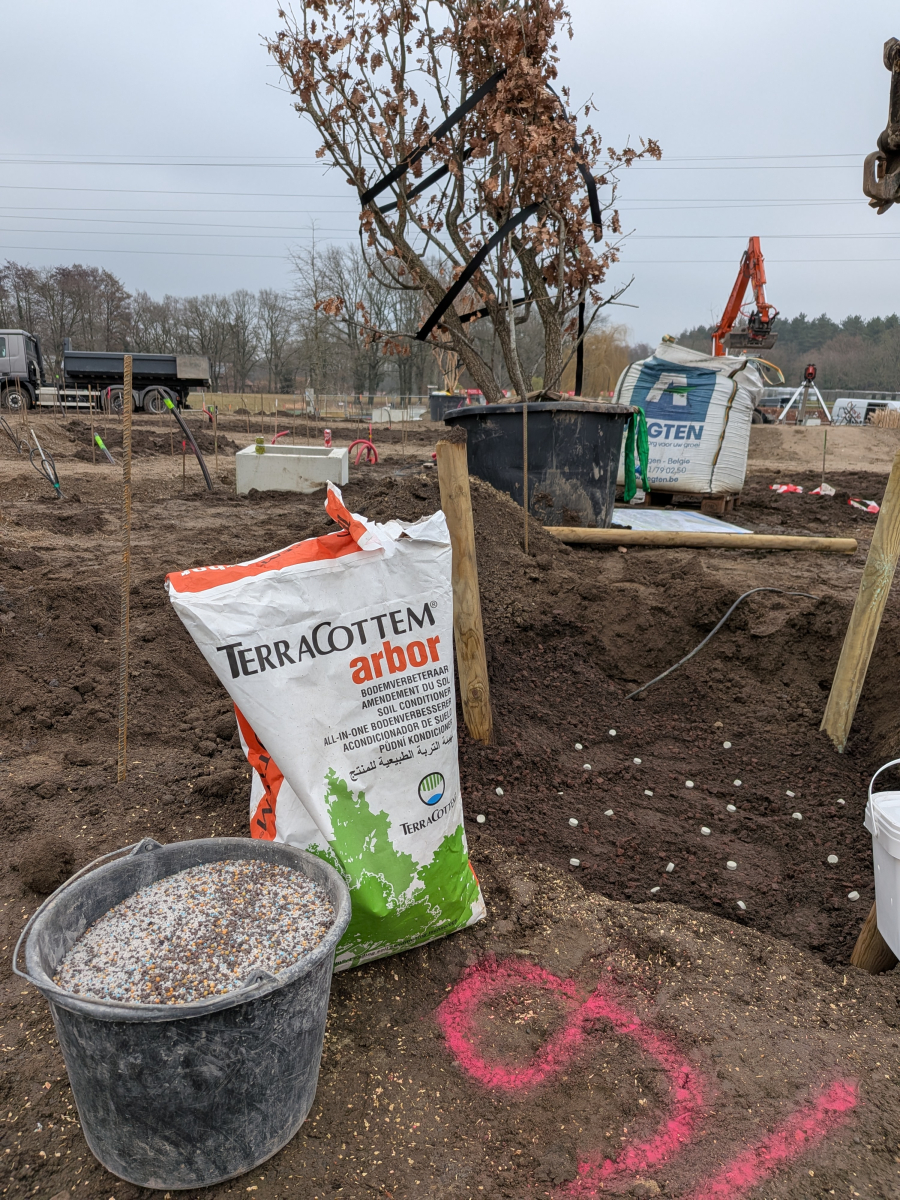
| TerraCottem Arbor is mixed into the soil once, when planting trees and shrubs. It encourages root development and helps retain water in the root zone, which helps ensure good establishment, reduces the risk of plant losses and minimises the need for aftercare. |
So TerraCottem helps retain water in the soil, but water management at Outspiration goes much further than that, doesn’t it?
Leen: We’ve created two swales and an infiltration area, among other features. Although these weren’t required for the project, we wanted the garden to serve an educational purpose and show visitors what’s possible.
We also have an irrigation system connected to a weather station. If rain is forecast, the system stops watering the day before, helping us avoid unnecessary irrigation.
The trees are on a separate irrigation circuit. They receive water less frequently, but in larger quantities each time, encouraging their roots to grow deeper rather than remaining close to the surface.
Looking at the garden just a few months after planting, what stands out most?
Bjorn: The transformation is remarkable. When you compare photos taken immediately after planting with how the garden looks just a few months later, you can see how much the plants have grown.
And despite a particularly challenging summer, we’ve seen very few plant losses and excellent growth.
For me, that’s the key message of this project. Success isn’t down to one product or a single measure. It’s about getting everything right: soil conditions, plant selection, soil life, water management, irrigation…
When you get those fundamentals right, the results speak for themselves.
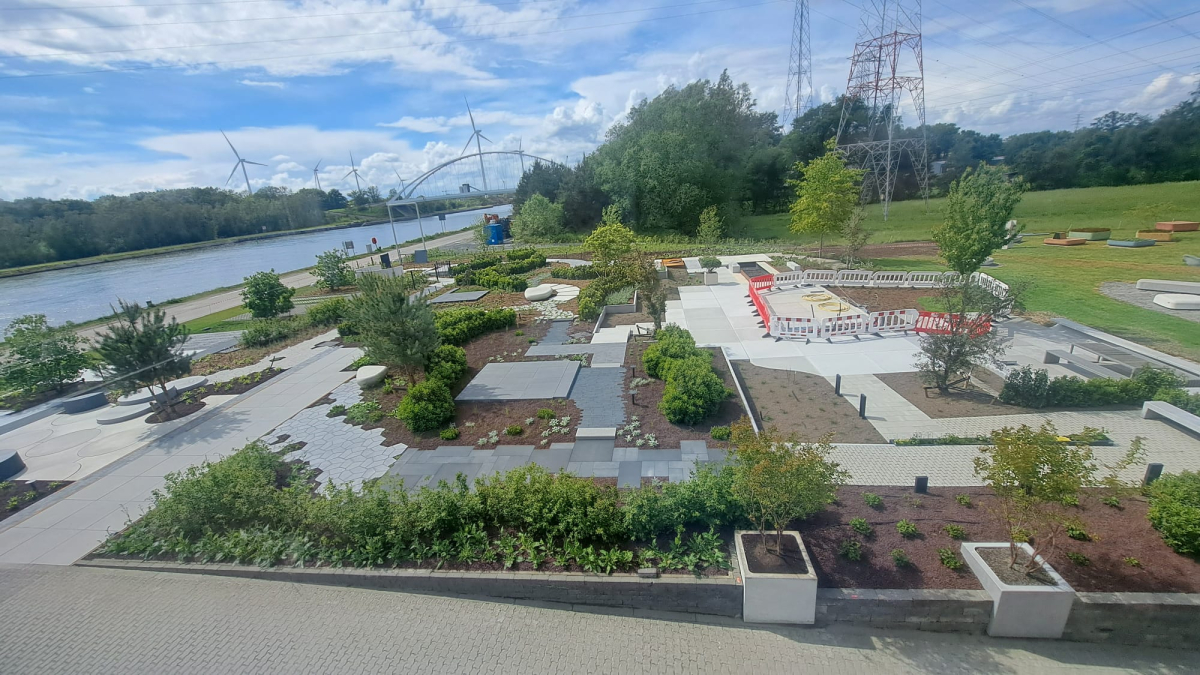
| May 2026 |
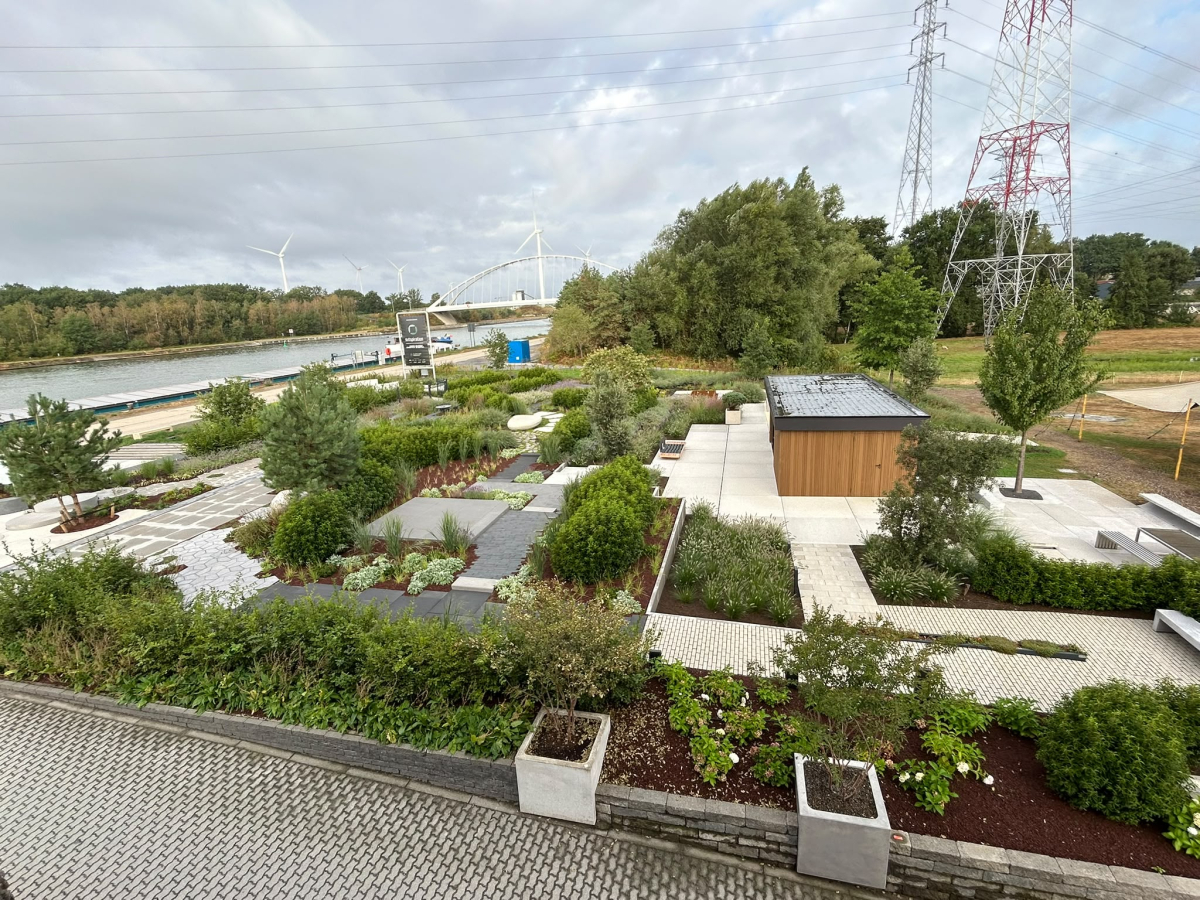
| August 2026 |
Outspiration now has considerably more greenery than the former show garden. Was that a deliberate decision?
Leen: Absolutely. The garden still covers around 2,800 m², but we’ve reduced the paved area from approximately 2,000 m² to just 1,000 m². For a concrete manufacturer, that’s quite a significant change. We still want to showcase and sell our concrete and paving products, but we also recognise the growing importance of green spaces.
I believe gardens of the future will place greater emphasis on planting, water retention and biodiversity. But that doesn’t mean every garden has to be left to grow wild.
At Outspiration, we’ve deliberately brought together a variety of garden styles. Alongside the traditional, contemporary and Mediterranean-style gardens, we also have a naturalistic garden, where nature is given more freedom to thrive.
This allows visitors to discover ideas that suit their personal tastes, while showing how even very different garden styles can incorporate more greenery.
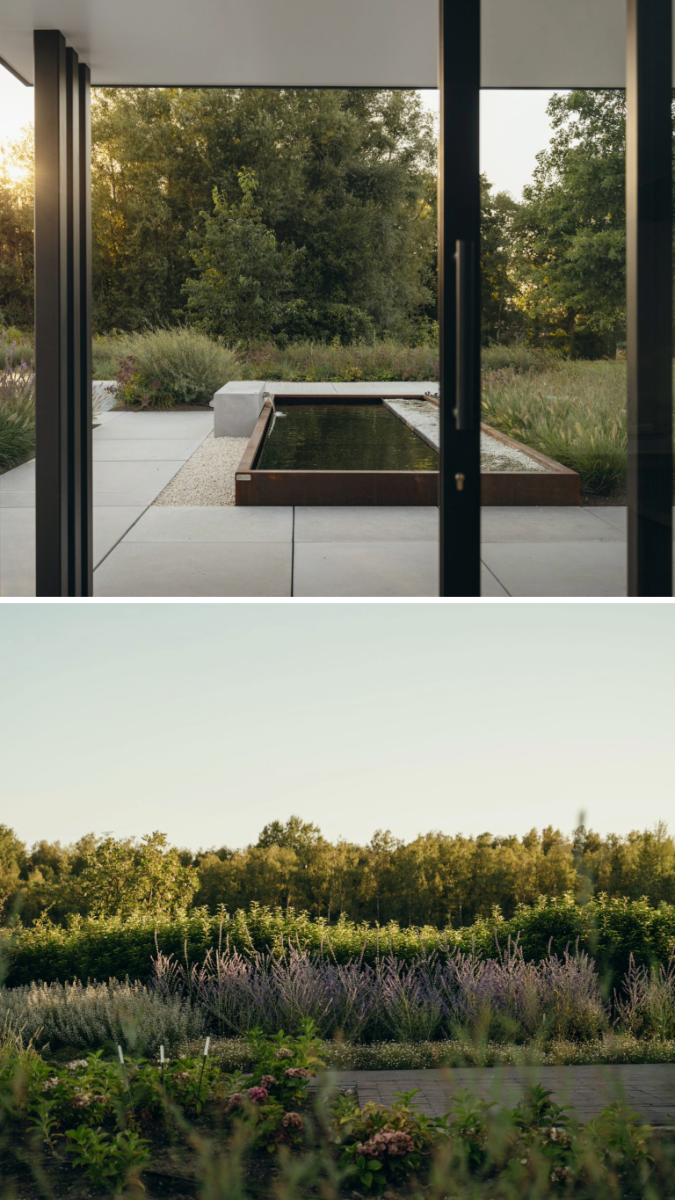
When it comes to biodiversity, we’ve worked closely with Leon Brabers from Biotoop. One of his key messages is that you don’t have to completely redesign your garden to make a difference. You can start small. For example, by turning just a few square metres of lawn into a wildflower area, you can gradually encourage greater biodiversity.
That’s what we want to demonstrate here too: a well-structured garden and a more natural approach can go hand in hand.
Bjorn: I don’t think everyone will suddenly want a completely wild garden either. Formal, structured gardens will always have their place. But even within a contemporary, minimalist design, there’s plenty of scope to introduce more planting. You can also allow certain areas to develop more naturally.
Above all, the message is clear: let’s make more room for greenery.
What do you hope visitors will take away from their experience at Outspiration?
Leen: That concrete and greenery can coexist in perfect harmony. We want to inspire visitors with different garden styles, paving solutions and planting schemes, while also raising awareness of biodiversity, water retention, swales, irrigation and the importance of healthy soil.
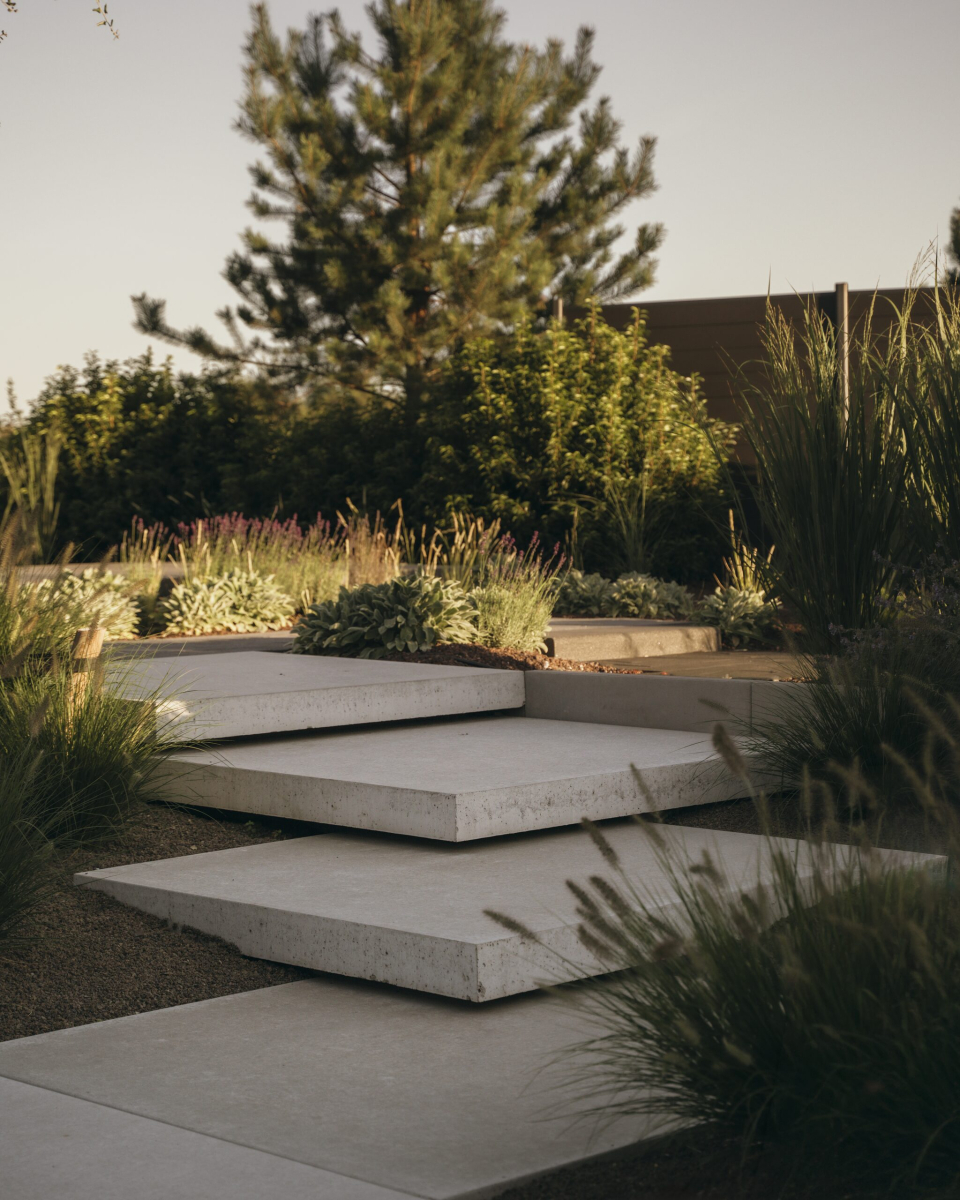
Visitors will be able to scan QR codes to learn more about the different areas of the garden and the thinking behind our design choices.
Bjorn, what does Outspiration demonstrate about the importance of soil?
Bjorn: That getting the foundations right can make all the difference. Start with a soil analysis, identify what the soil needs, and adapt your plant selection and overall approach accordingly.
Despite a particularly challenging summer, the plants have shown remarkable growth in a short space of time, with very few losses.
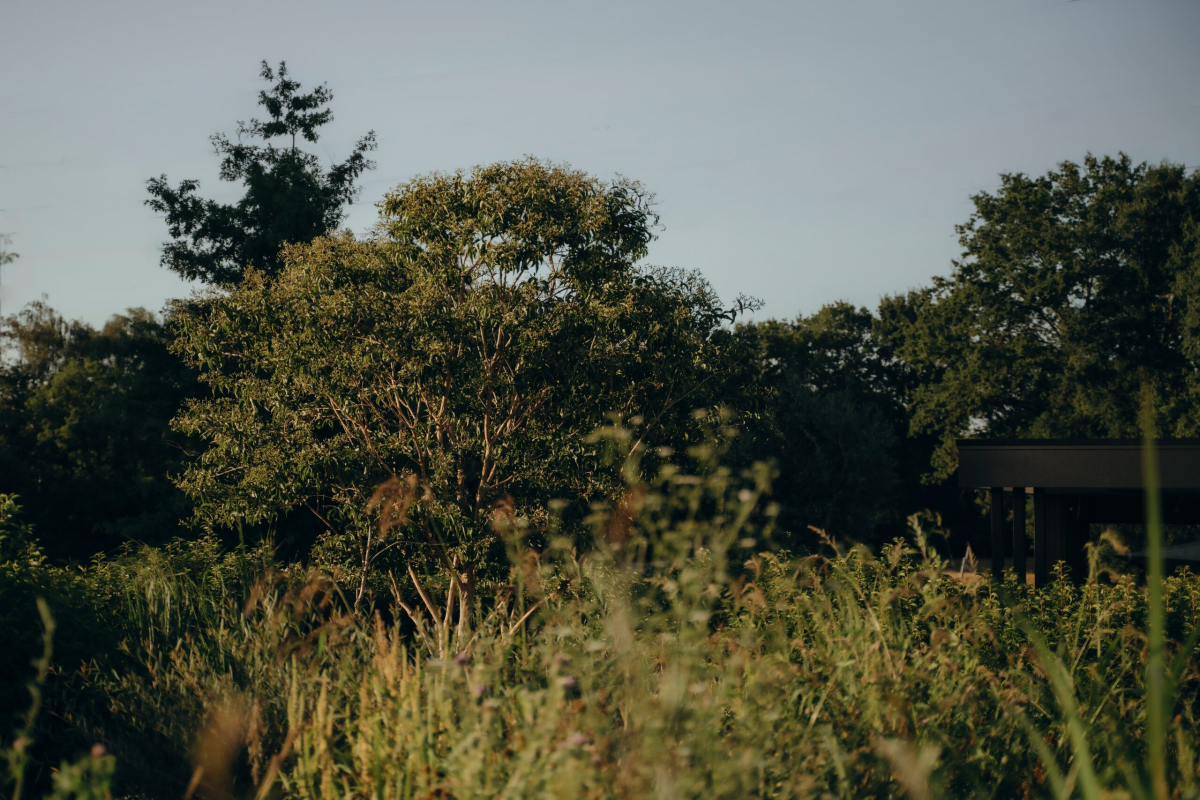
The importance of the soil might not be immediately obvious as you walk around the garden.
"But without that solid foundation, we could never have achieved the same results."
If you know someone who might find this article useful, feel free to share the link.
If you’d like to experience Outspiration for yourself, book your visit here:
